Back to Resources
Guide

Complete Guide to CNC Feeds & Speeds

Master the mathematics of machining: From basic RPM/IPM formulas to advanced chip thinning and material-specific strategies.

What Are Feeds and Speeds in CNC Machining?

Feeds and speeds are the two fundamental cutting parameters that govern every CNC machining operation, defining how the tool interacts with the workpiece material. "Speed" (also called cutting speed) refers to spindle rotation rate measured in RPM (revolutions per minute) or surface speed measured in SFM (surface feet per minute) or m/min, representing how fast the cutting edge moves across the material. "Feed" refers to the tool's linear advance rate measured in IPM (inches per minute), mm/min, or per-tooth as chip load (IPT). The three foundational formulas, as documented in Machinery's Handbook (31st Edition, Industrial Press), are: RPM = (SFM × 3.82) / Tool Diameter (inches), where 3.82 = 12/π; Feed Rate = RPM × Number of Flutes × Chip Load; and SFM = (π × Diameter × RPM) / 12. At its core, machining is about balancing two opposing forces: Heat (generated by speed) and Pressure (generated by feed). This guide covers both the mathematics and the practical application of these parameters across all common CNC materials and operations.

What this guide covers best

Use this page for the formula chain from SFM/Vc to RPM, chip load to feed rate, and then feed plus engagement to MRR. For true turning or drilling jobs, treat this guide as theory and validate final setup values in the dedicated turning and drilling calculators where feed per revolution and operation-specific constraints are handled more directly.

  • Speed (RPM/SFM): Generates Heat. High speed = high heat.
  • Feed (IPM/IPT): Generates Pressure. High feed = high mechanical load.

The Golden Rule:

If the tool burns up, decrease Speed (RPM). If the tool breaks (snaps), decrease Feed.
Coolant controlFluid condition tied to tool life and finishConcentrationDeliveryChip ControlValidate concentration, delivery pressure, filtration, and material compatibility on the machine.
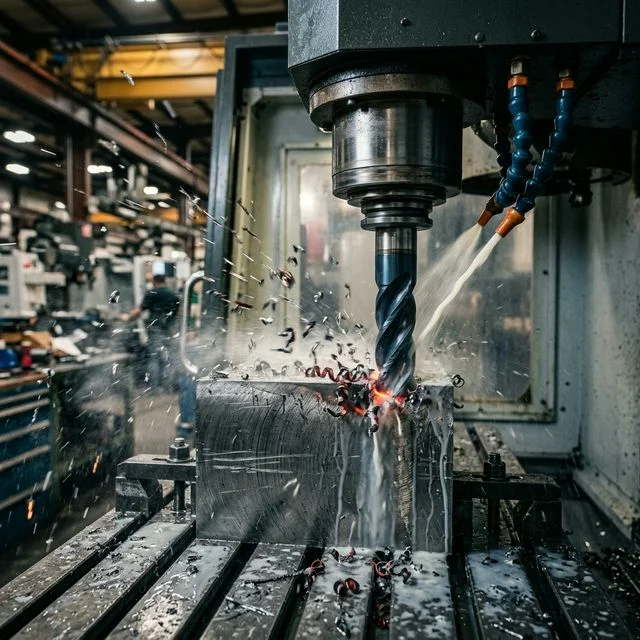
Feeds and speeds in action: a carbide end mill engages a steel workpiece at optimized cutting parameters

Instant Calculators

Skip the math. Use our optimized calculators for specific operations and materials:

The 3 Essential Formulas

1. RPM (Spindle Speed)

Revolutions Per Minute

RPM = (SFM × 3.82) / Tool Diameter

SFM (Surface Feet per Minute): The constant speed at which the cutting edge moves across the material. This is a property of the material/tool combination (e.g., Carbide in Aluminum = 1200 SFM).

3.82: A constant derived from (12 / π). It converts feet to inches.

2. IPM (Feed Rate)

Inches Per Minute

IPM = RPM × IPT × Number of Flutes

IPT (Inches Per Tooth): Also known as Chip Load. The thickness of the chip removed by each cutting edge. Essential for tool life.

3. SFM (Surface Speed)

Surface Feet Per Minute

SFM = (RPM × Tool Diameter) / 3.82

Use this to reverse-calculate the speed you are running to check if it's within tool manufacturer recommendations.

CNC process modelEngineering inputs converted into a checked setupInputsCalculationValidationValidate machining workflows against machine, tool, material, and inspection constraints.
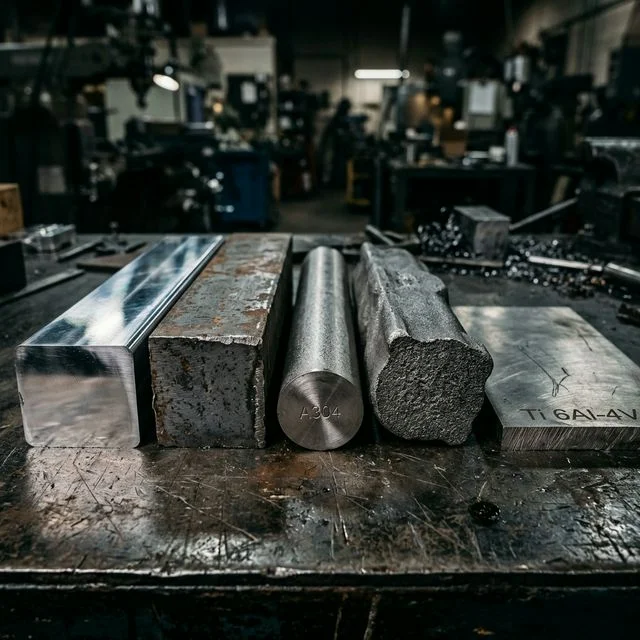
ISO material groups at a glance — each metal demands unique cutting parameters based on its thermal and mechanical properties

ISO Material Groups

CNC materials are classified into 6 ISO groups, each with a distinct color code and machining characteristics.

ISO PSteel

Examples:

1018, 4140, 1045, A36

Characteristics:

Long continuous chips, high heat generation. Requires thermal coating (TiAlN).

Typical SFM (Carbide):

350 - 800 SFM

ISO MStainless

Examples:

303, 304, 316, 17-4 PH

Characteristics:

Work hardening, high cutting forces, built-up edge. Keep feed constant — don't dwell!

Typical SFM (Carbide):

150 - 350 SFM

ISO KCast Iron

Examples:

Grey Iron, Ductile Iron

Characteristics:

Short chips (powder), highly abrasive. Wears tools via abrasion. Run dry (no coolant).

Typical SFM (Carbide):

250 - 600 SFM

ISO NAlum/Copper

Examples:

6061-T6, 7075, Brass, Bronze

Characteristics:

High speed, gummy material. Needs polished flutes (ZrN or uncoated) to prevent sticking.

Typical SFM (Carbide):

800 - 3000+ SFM

ISO STitanium/Super

Examples:

Ti-6Al-4V, Inconel 625/718, Hastelloy

Characteristics:

Extreme heat generation, poor thermal conductivity. Heat stays in tool.

Typical SFM (Carbide):

60 - 200 SFM (Slow!)

ISO HHardened

Examples:

Hardened D2, A2 (45-65 HRC)

Characteristics:

Requires extremely rigid setup. Negative rake angles. Light cuts, high speed.

Typical SFM (Carbide):

100 - 400 SFM

CNC process modelEngineering inputs converted into a checked setupInputsCalculationValidationValidate milling operations against machine, tool, material, and inspection constraints.
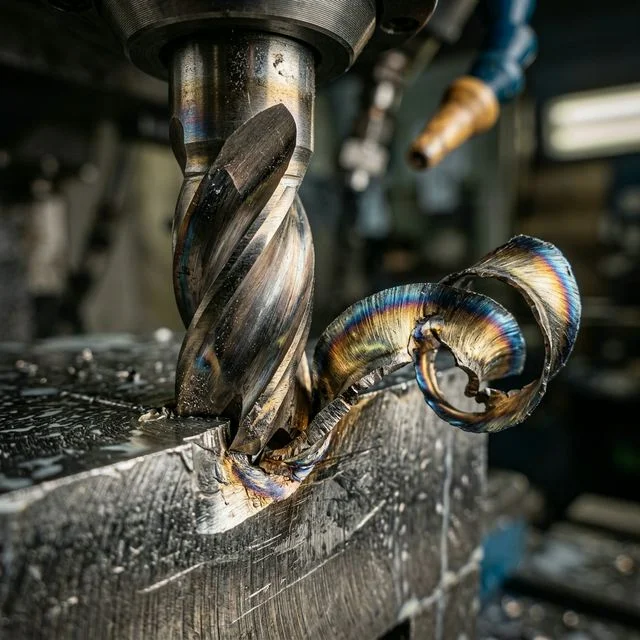
Chip formation under optimal cutting conditions — the golden-blue temper colors indicate proper heat transfer into the chip

Advanced Concept: Chip Thinning

When the Radial Width of Cut (WOC) is less than 50% of the tool diameter, the actual chip thickness is thinner than the programmed Feed Per Tooth (IPT).

This means your tool is rubbing instead of cutting, generating excess heat and premature wear. to fix this, you must increase your feed rate.

Radial Chip Thinning Factor (RCTF) Formula:

RCTF = 1 / √(1 - (1 - (2 × WOC / Dia))²)

Multiply your programmed IPM by this factor to maintain proper chip thickness.

Example

10% Radial Stepover

Tool Diameter: 0.500"

1.66×

Feed Rate Increase Required

(If programmed 20 IPM, run 33 IPM)

Troubleshooting Guide

SymptomLikely CauseSolution
Tool Built-Up Edge (BUE)Material welding to flute. Common in Aluminum/Stainless.Increase RPM (Heat), Increase Coolant concentration, Check coating.
Chatter (Vibration)Lack of rigidity, harmonics. long stick-out.Reduce RPM (10-20%), Increase Feed (stabilizes cut), Reduce stick-out.
Rapid Flank WearExcessive speed (RPM). Friction heat.Decrease RPM, check coolant supply.
Tool Chipping / BreakingExcessive mechanical load (Feed). Runout. Recutting chips.Decrease Feed (IPM), Inspect runout, improve chip evacuation.
Poor Surface FinishFeed too high, tool deflection, BUE.Increase RPM, Decrease Feed (for finish pass only), Take lighter depth of cut.

Reference Paths for Feeds, Materials, and Shop Planning

Move from formula review into the supporting tables, maintenance guides, and process references that keep machining parameters grounded in real shop constraints.

Frequently Asked Questions

What is the formula for calculating RPM from SFM?

The formula for converting Surface Feet per Minute (SFM) to RPM is: RPM = (SFM × 3.82) / Tool Diameter in inches. The constant 3.82 is derived from 12/π (12 divided by 3.14159), converting between the circumference of the tool and linear surface speed, as documented in Machinery's Handbook (31st Edition, p. 1056). For metric units, the equivalent formula is RPM = (Vc × 318) / Tool Diameter in mm, where 318 = 1000/π and Vc is cutting speed in m/min. For example, machining 6061-T6 aluminum at 300 m/min (984 SFM) with a 12mm end mill: RPM = (300 × 318) / 12 = 7,950 RPM. This formula is fundamental because cutting tool manufacturers — including Sandvik Coromant, Kennametal, and Mitsubishi — specify recommended cutting speeds in SFM or m/min rather than RPM, since the optimal surface speed remains constant regardless of tool diameter.

How do I calculate feed rate (IPM) for CNC milling?

Feed rate in inches per minute (IPM) for CNC milling is calculated using the formula: Feed Rate = RPM × Chip Load (IPT) × Number of Flutes, per Machinery's Handbook (31st Edition). Chip load (IPT, inches per tooth) represents the material thickness each cutting edge removes per revolution. For example, a 4-flute end mill running at 6,000 RPM with a recommended chip load of 0.003 inches/tooth produces: Feed Rate = 6,000 × 0.003 × 4 = 72 IPM (1,829 mm/min). The metric equivalent is: Feed Rate (mm/min) = RPM × Chip Load (mm/tooth) × Number of Flutes. Broad milling starting points vary significantly by material: aluminum 0.08-0.15 mm/tooth, carbon steel 0.05-0.10 mm/tooth, stainless steel 0.03-0.08 mm/tooth, and titanium often closer to 0.02-0.06 mm/tooth for roughing with carbide. Feed rates that are too low cause rubbing, heat generation, and accelerated tool wear rather than efficient material removal.

What SFM should I use for aluminum with a carbide end mill?

For 6061-T6 aluminum — the most commonly machined aluminum alloy in CNC milling — recommended SFM ranges with carbide end mills depend on the operation type and tool coating. Per Sandvik Coromant and Kennametal application guides, roughing with uncoated or ZrN-coated carbide tools should start at 800-1,200 SFM (245-366 m/min) with chip loads of 0.003-0.006 inches/tooth. Finishing operations can increase to 1,500-3,000 SFM (457-914 m/min), particularly with high-speed machining (HSM) toolpaths that maintain constant tool engagement. Diamond-coated (PCD) or DLC-coated tools enable even higher speeds: 2,000-5,000 SFM for roughing and up to 8,000 SFM for finishing in specialized HSM applications. The key to aluminum machining is maintaining adequate chip load — too light a cut causes the soft material to smear and weld onto the cutting edge (built-up edge, or BUE), degrading surface finish and tool life.

What is chip thinning and when does it apply?

Chip thinning is a geometric phenomenon that occurs when the radial width of cut (WOC or ae) is less than 50% of the tool diameter, as explained in Sandvik Coromant's Metal Cutting Technology training materials. When the tool engagement is reduced, the actual chip thickness becomes thinner than the programmed chip load because the tool contacts the material at a shallower arc. This thinner chip fails to carry away sufficient heat, causing rubbing instead of cutting and dramatically reducing tool life. To compensate, use a radial chip thinning factor such as RCTF = 1 / √(1 - (1 - (2 × WOC / Dia))²). For example, with a 12mm end mill taking a 1.2mm radial cut (10% engagement): RCTF ≈ 1.67, so a programmed 1,000 mm/min feed would need to increase to about 1,670 mm/min to maintain effective chip thickness. This compensation is critical for trochoidal milling and adaptive clearing strategies commonly used in modern CAM software.

Why is my end mill chattering during machining?

Chatter in CNC milling is forced vibration caused by the interaction between the tool's natural frequency and the cutting forces at specific spindle speeds, as described in the stability lobe theory documented in Manufacturing Automation by Yusuf Altintas (Cambridge University Press). The most effective solutions, in order of impact, are: (1) Reduce tool stick-out to the minimum required — every additional diameter of overhang dramatically reduces rigidity (stiffness decreases with the cube of unsupported length). (2) Change RPM by 10-20% up or down to move away from the resonant frequency. (3) Increase feed rate per tooth — higher chip loads stabilize the cut by increasing damping forces. (4) Reduce radial engagement (stepover) while maintaining or increasing feed rate. (5) Switch to a variable-helix or variable-pitch end mill, which breaks up the harmonic pattern by distributing cutting forces unevenly across the flutes, preventing resonance buildup.