The Hierarchy of Optimization
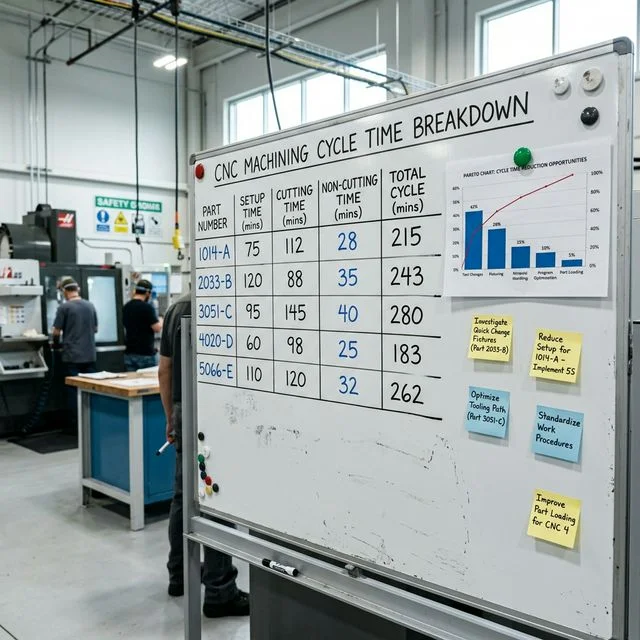
Not all reductions are equal. Saving 2 seconds on a tool change does not matter if roughing or inspection dominates the cycle. Start from measured loss size, then choose the least risky correction.
1Remove Verified Air-Cutting Loss
Impact: High
Baseline first: measure actual cycle time before changing feeds or CAM strategy. Then compare CAM rapid height, retract distance, safe clearance, and controller limits before reducing air moves.
2Validate High-Efficiency Milling
Impact: Very High
High-efficiency milling can reduce roughing time, but only when radial engagement, chip thinning, flute length, workholding, coolant, and machine torque support the move.
3Reduce Tool-Change and Index Loss
Impact: Medium
Count tool changes, probe calls, turret indexes, magazine waits, and spindle state changes. Combine operations only when tool life, tolerance, and surface finish remain stable.
4Test High-Feed Roughing
Impact: High (Roughing)
High-feed tools can help bulk removal when insert geometry, programmed stepdown, machine rigidity, and chip evacuation match the job. Confirm spindle load and corner behavior before release.
5Controlled Feed-Override Trial
Impact: Medium (Cumulative)
Change one feed segment at a time, record actual cycle delta, and inspect the part before updating the CAM master. Release check: prove every reduction with part quality, tool wear, spindle load, and repeatability data.
Related Guides
Rebuild the quote baseline with machining time estimation or the machining time calculator before treating a cycle-time reduction as permanent capacity.