Back to Resources
Advanced Technique

High Speed Machining (HSM) Guide

It's not just about running at 20,000 RPM. It's about maintaining constant tool engagement angle.

The Physics of HSM

Traditional milling takes heavy cuts at slow speeds. High Speed Machining (HSM) takes light radial cuts at very high speeds and high feed rates.

The goal is to reduce the Tool Engagement Angle.
CNC process modelEngineering inputs converted into a checked setupInputsCalculationValidationValidate milling operations against machine, tool, material, and inspection constraints.
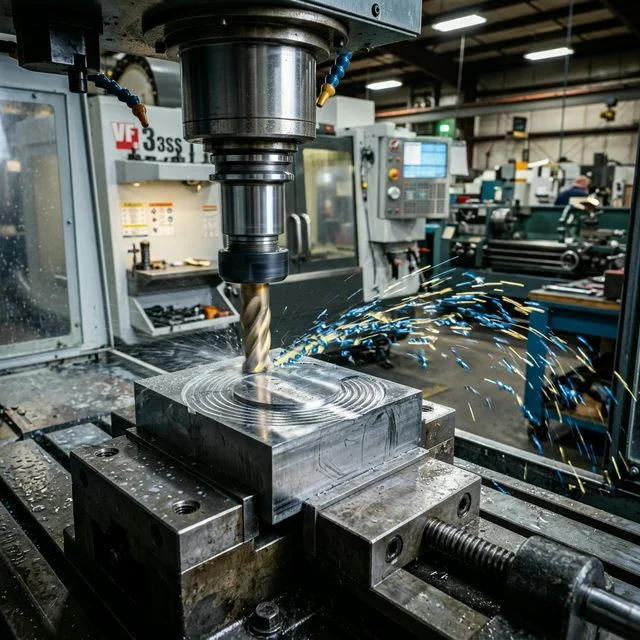
Dynamic toolpath in action — light radial engagement at high speed produces thin, fast-ejecting chips that carry heat away from the tool

1. Chip Thinning

When taking a light radial cut (less than 50% of cutter diameter), the actual chip thickness is thinner than the programmed feed rate.

Rule: You MUST increase feed rate to compensate for chip thinning. Otherwise, you will rub the material and burn the tool.

2. Heat Management

In HSM, the heat goes into the chip, not the tool or the part. Because the contact time is so short and the chip is ejected so fast, the tool stays cool.

Core Strategies
Tooling decisionTool geometry and coating checked against the cutMaterialTool DataWear CheckConfirm catalog limits with measured wear, finish drift, and machine stability.
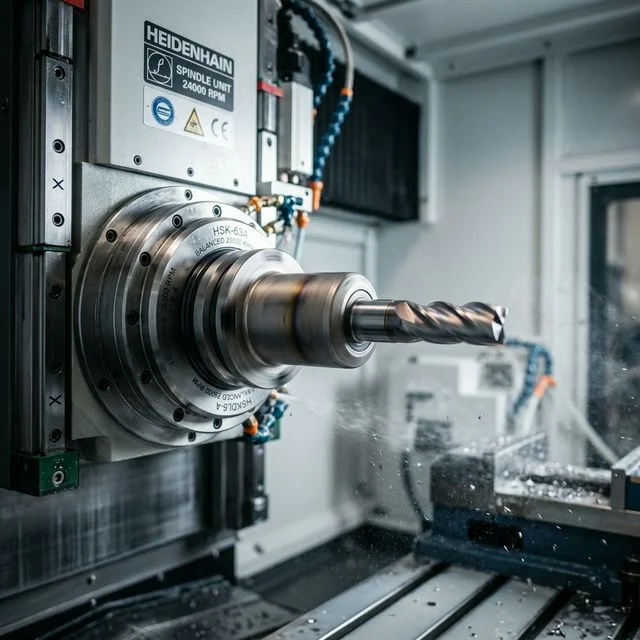
HSM requires high-RPM spindles (10,000+ RPM) with precision-balanced HSK tool holders for vibration-free cutting

1. Trochoidal Milling

A circular motion used to machine slots wider than the cutter. The cutter spirals into the material, maintaining a constant low radial load. Allows cutting full depth (2xD or 3xD) in a single pass.

2. Peel Milling

"Peeling" thin layers off the material at high feed rates. Used for facing or profiling. The stepover is typically 5-10% of cutter diameter.

3. Plunge Milling

Converting lateral force into axial force. The tool cuts along the Z-axis (like a drill). Ideal for deep pockets or weak setups where vibration is an issue.

Parameter Guidelines

StrategyRadial Depth (Ae)Axial Depth (Ap)Speed Adjustment
Dynamic Roughing5% - 15% Dia200% - 300% Dia+20% SFM
High Feed Milling40% - 60% Dia2% - 5% Dia+50% Feed
Trochoidal Slotting10% - 20% Step200% Dia+30% SFM

Requirements

You can't just run any machine fast. HSM requires:

  • High RPM Spindle (10k+)
  • Fast Look-Ahead Control
  • Balanced Tool Holders
  • CAM Software (Mastercam, Fusion 360, etc)

Calculate MRR

See how HSM strategies dramatically increase Material Removal Rate compared to traditional milling.

MRR Calculator

Frequently Asked Questions

What is High Speed Machining (HSM)?

HSM uses light radial cuts at very high speeds and feed rates. The goal: reduce tool engagement angle, keep chip load constant, and transfer heat into the chip rather than the tool or part.

What is trochoidal milling?

A circular toolpath motion to machine slots wider than the cutter. The tool spirals in at constant low radial load, allowing full-depth cuts (2×D or 3×D) in a single pass while extending tool life.

What are the requirements for HSM?

High RPM spindle (10,000+), fast look-ahead CNC control, balanced tool holders, and CAM software capable of dynamic toolpaths (Mastercam, Fusion 360, etc.).

What is chip thinning and why does it matter in HSM?

When radial cut is less than 50% of cutter diameter, the actual chip is thinner than programmed feed rate implies. You must increase feed rate to compensate, or the tool rubs and burns.

What are the main HSM strategies and their parameters?

Dynamic Roughing: 5–15% radial, 200–300% axial, +20% SFM. High Feed Milling: 40–60% radial, 2–5% axial, +50% feed. Trochoidal Slotting: 10–20% step, 200% depth, +30% SFM.