What is GB/T 17421?
GB/T stands for "Guobiao/Tuijian" (State Standard / Recommended). For machine-tool acceptance, the current checked mappings are GB/T 17421.1-2023 to ISO 230-1:2012 and GB/T 17421.2-2023 to ISO 230-2:2014.
In practice, these standards are often mapped together by part number, but do not assume every GB/T 17421 part or older report is equivalent without edition, clause, method, and contract review.
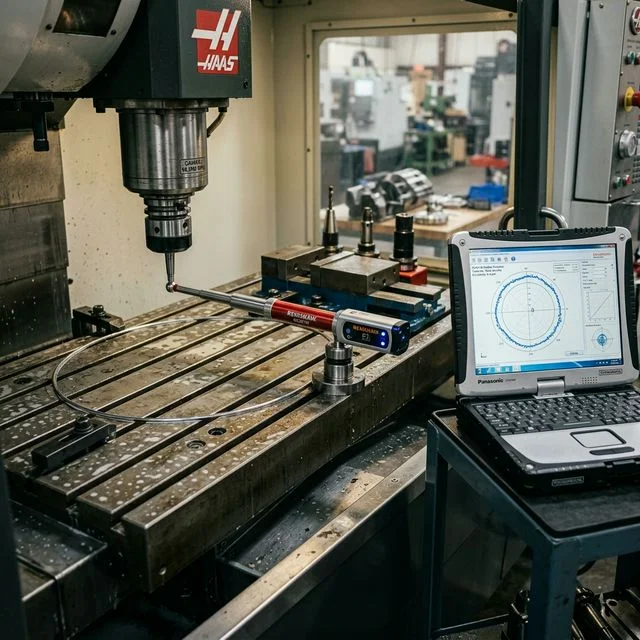
Current Checked Mappings
| Chinese Standard | ISO Mapping | Subject |
|---|---|---|
| GB/T 17421.1-2023 | ISO 230-1:2012 | Geometric Accuracy |
| GB/T 17421.2-2023 | ISO 230-2:2014 | Positioning Accuracy |
Common Pitfalls for Importers
While the standard itself is solid, the application of the standard can vary in lower-tier factories.
Acceptance Mapping Sequence
- Confirm the edition: Match GB/T and ISO revision years before comparing clauses.
- Confirm the method: Check target positions, approach directions, instruments, environment, and uncertainty statement.
- Confirm the report template: Require raw measurement records when a supplier summary does not show setup details.
- Confirm the contract limit: Treat the signed purchase acceptance language as the pass/fail authority.
1. Methodology Drift
Acceptance reports can look similar while using different internal test scripts. If the same metric name is produced by different procedures, results are not directly comparable.
Tip: Always request underlying measurement records, not only summary PDFs.
2. Thermal Conditions
Environmental conditions can materially influence measured results. Make sure ambient condition, warm-up, and stabilization details are documented in the report set.
Why This Matters
Understanding GB/T 17421 gives you leverage. If a manufacturer makes an accuracy claim, ask for the exact clause, test procedure, and uncertainty statement behind that number.
Related Calculators
These calculators help turn standards and acceptance data into machine-selection, maintenance, and investment decisions.
Related Guides
Before accepting imported machine reports, compare the evidence path against the ISO standards overview and the ISO 230 reference table.