The 4 Categories of Metalworking Fluids
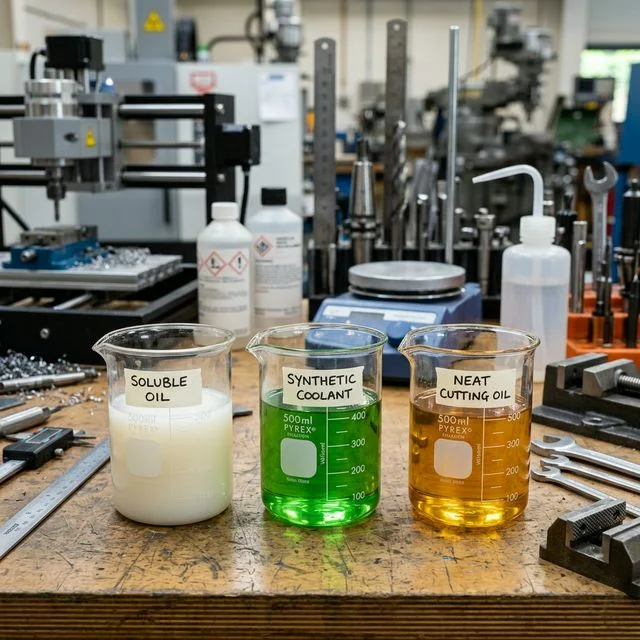
Composition: ~50% Mineral oil based. Mixed with water.
Best For: Heavy Roughing, Tapping, Threading, and shops cutting primarily Aluminum.
Composition: 5-30% Mineral oil + polymers.
Best For: General Purpose Job Shops (Mills & Lathes).
Composition: 0% Oil. Pure chemical polymers.
Best For: High-Speed Milling, Surface Grinding, shops needing long sump life with minimal maintenance.
Composition: 100% Oil. No water.
Best For: Swiss Lathes, Medical Titanium, Gun Drilling.
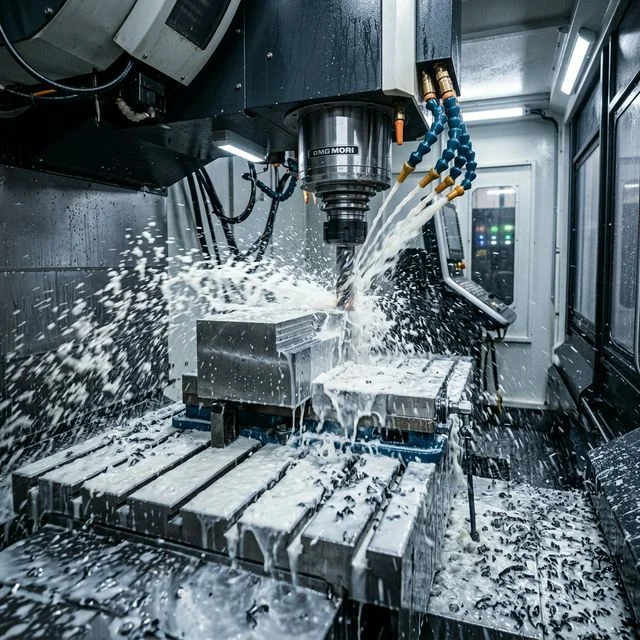
Concentration & Maintenance: The #1 Mistake Shops Make
The most common coolant failure isn't choosing the wrong type - it's running the right coolant at the wrong concentration. Low concentration starves the emulsion, drops the pH below 8.5, and lets anaerobic bacteria flourish. High concentration wastes money and causes skin irritation.
| Operation | Target % | Refractometer Reading |
|---|---|---|
| General Milling / Turning | 6-8% | Check daily, adjust weekly |
| Heavy Roughing / Cast Iron | 8-10% | Higher concentration combats tramp oil |
| Grinding | 3-5% | Lower for cooling priority |
| Tapping / Threading | 8-12% | Lubricity-critical operations |
pH Monitoring: Healthy water-mixed coolant runs at pH 8.5-9.5. Below 8.0 signals bacterial growth. Above 10.0 causes skin irritation and paint damage. A simple pH meter or test strip checked weekly costs nothing and prevents $500+ sump dumps.
Related Calculators
Use these calculators when coolant choice changes spindle speed, feed, chip load, or surface-speed limits on the machine.